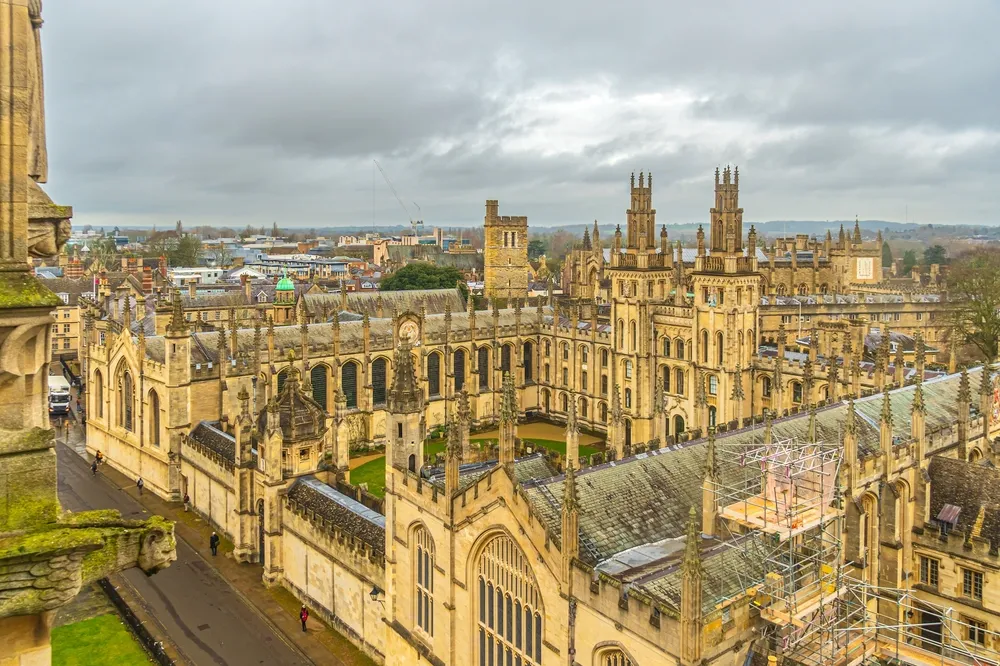
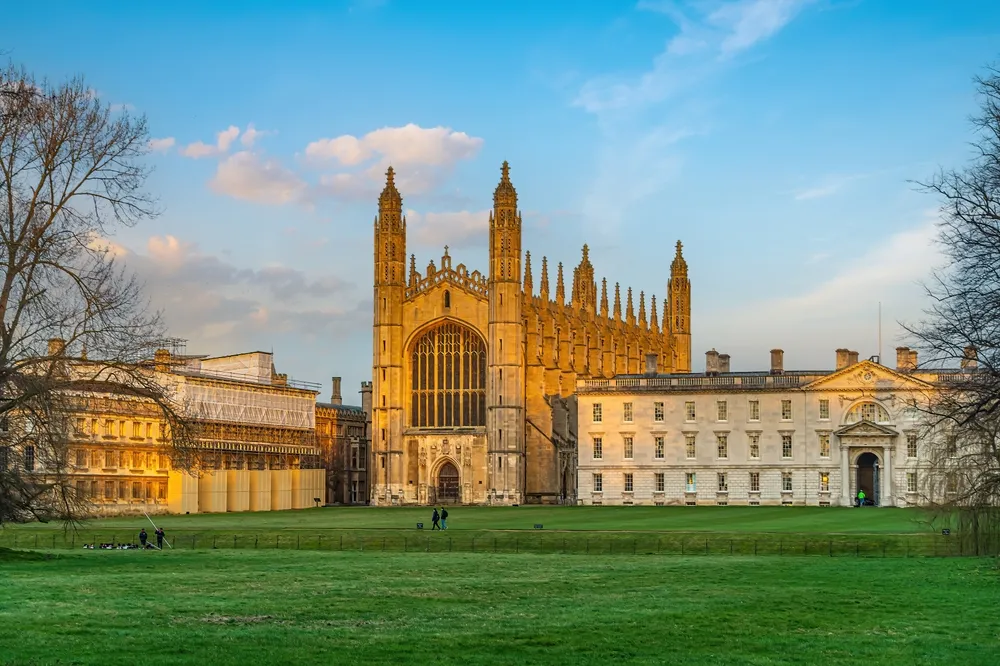
Oxford and Cambridge vs. the Ivy League: What American Students Need to Know
How admissions differ, what the statistics really mean, and how American students can prepare.
Updated November 2026. Admissions requirements and testing arrangements can change, so always check the latest information for your intended year of entry.
I often work with academically strong American students who are considering Oxford, Cambridge and highly selective U.S. universities.
On paper, that seems completely logical. If you are academically strong enough to consider Harvard, Yale, Princeton or another highly selective U.S. university, why not add Oxford or Cambridge to the list?
You certainly can.
But there is an important catch:
A strong Ivy League applicant is not automatically a strong Oxford or Cambridge applicant.
Oxford and Cambridge, often referred to collectively as Oxbridge, assess applicants through a very different lens from highly selective U.S. universities.
Understanding those differences early can completely change how you prepare.
At Oxford and Cambridge, the Course Comes First
Perhaps the biggest difference is that you don’t really apply to Oxford or Cambridge simply to “go to Oxford” or “go to Cambridge.”
You apply to study a specific course.
At Oxford, that might mean History, English, Engineering Science, Human Sciences, Experimental Psychology or Philosophy, Politics and Economics (PPE).
At Cambridge, you might choose Natural Sciences, Engineering, Human, Social, and Political Sciences (HSPS), Psychological and Behavioural Sciences, or another subject.
You are committing to that academic direction from the outset.
At many Ivy League universities, students apply to an undergraduate college rather than directly to a specific major. Harvard and Yale, for example, allow students to explore different subjects before formally declaring their major, usually during sophomore year.
There are exceptions. At Penn and Cornell, applicants choose an undergraduate school, and some programs require students to identify their intended major from the outset.
But the fundamental difference remains: Oxford and Cambridge admit students to a specific course of study, while many U.S. universities offer considerably more academic flexibility.
Your chosen course at Oxford or Cambridge shapes almost every part of your application: the academic entry requirements, personal statement, admissions test where required, written work where required and interview.
For that reason, when a student tells me, “Oxford or Cambridge is my dream university,” my first question is usually:
What do you want to study?
If there is no convincing answer to that question yet, we need to start there.
Explore: Oxford’s undergraduate courses and Cambridge’s undergraduate courses.
Are Oxford and Cambridge Easier to Get Into Than the Ivy League?
At first glance, Oxford and Cambridge can appear easier to get into than Harvard, Yale or Princeton.
Their overall acceptance rates are often considerably higher than those of the most selective U.S. universities.
But the headline figures don’t tell the whole story.
You Cannot Apply to Both Oxford and Cambridge
This is one of the biggest differences from the American admissions system.
Students cannot apply to both Oxford and Cambridge for undergraduate entry in the same admissions cycle.
An American student might apply to Harvard, Yale, Princeton, Brown, Columbia and several other highly selective universities simultaneously.
But they must choose between Oxford and Cambridge.
This limits the number of applications each university receives and makes direct comparisons with U.S. admissions statistics more complicated.
What Do the Admissions Statistics Actually Show?
The differences between UK and international applicants are particularly interesting.
Cambridge’s official figures for 2025 entry show:
- UK applicants: Approximately 19.6% secured a place.
- Overseas applicants: Approximately 10.7% secured a place.
- U.S.-resident applicants: Just 5.5% secured a place.
The U.S. figures deserve a closer look.
Of 597 applicants from the United States, 64 received offers and 33 ultimately secured places.
That means approximately 10.7% received an offer, while only 5.5% secured a place.
Some students may have missed the conditions of their offers, while others may have chosen a U.S. university instead. The statistics alone don’t tell us why.
Oxford shows a similar pattern.
In 2024, approximately 17.8% of UK applicants were admitted, compared with 7.7% of applicants from outside the EU.
Looking specifically at U.S. applicants, approximately 6.5% secured a place across the 2022–2024 admissions cycles.
These figures generally classify applicants by where they ordinarily live, rather than necessarily their citizenship.
Explore: Oxford’s undergraduate admissions statistics and Cambridge’s admissions statistics, including course and country breakdowns.
Why Might American Applicants Have Lower Success Rates?
There are several possible explanations.
One is that some American students may treat Oxford or Cambridge as an ambitious addition to an otherwise U.S.-focused college list.
Applying to highly selective universities as a “reach” is familiar in American admissions.
But a student who looks impressive on paper may not have undertaken the subject-specific preparation needed to make a competitive Oxford or Cambridge application.
A student might have outstanding grades, leadership experience, athletics and community involvement, yet have spent relatively little time exploring their chosen academic subject beyond the classroom.
UK applicants, by contrast, are often guided toward Oxford or Cambridge through a more subject-focused application process.
There may also be differences in the subjects students choose, the qualifications they present and their preparation for admissions tests and interviews.
And some American students who receive offers may ultimately decide to attend a U.S. university.
These are plausible explanations, not proven reasons for the statistical differences.
Competition also varies enormously by subject. Applying for Economics, Computer Science or Medicine can be very different from applying for a less oversubscribed course.
The takeaway? Don’t assume that Oxford or Cambridge is an easier alternative to the Ivy League simply because its overall acceptance rate looks higher.
For American students, the more useful questions are whether you meet the academic requirements, how competitive your chosen course is and how well your preparation aligns with what the university is looking for.
Oxford and Cambridge Prioritize Subject-Specific Academic Potential
American students are accustomed to hearing about holistic admissions.
At highly selective U.S. colleges, applicants may devote years to building a combination of excellent academics, extracurricular involvement, leadership, athletics, community service, employment and other accomplishments.
These universities are academically demanding, but they also consider a broader range of personal qualities, experiences and potential contributions to their communities.
Oxford and Cambridge take a more specifically academic approach.
Admissions tutors are primarily interested in your academic ability, potential and commitment to the course you want to study.
Extracurricular activities are relevant when they help demonstrate your suitability for that subject.
This can be liberating for American applicants.
You do not need to be class president, establish a nonprofit or build a carefully engineered list of ten activities.
But you do need to convince academics that you are exceptionally well suited to studying your chosen subject.
Your personality still matters. Your curiosity, enthusiasm and individuality will naturally come through in the questions you investigate and the way you think about them.
But Oxford and Cambridge are not trying to construct a class containing the perfect mixture of violinists, athletes, entrepreneurs, volunteers and student leaders.
They are selecting students whom they believe have the academic potential to flourish on their particular course.
Extracurricular vs. Super-Curricular Activities
This distinction is extremely useful.
Extracurricular activities take place outside your academic studies: sports, student government, volunteering, clubs and many other activities.
Super-curricular activities extend your academic interest beyond what you are required to do at school.
For a prospective History student, that might mean independently investigating a historical debate after encountering it in AP U.S. History.
For Psychology, it could mean reading a study that challenges something taught in AP Psychology and following that question further.
For Economics, it might mean listening to an economist discuss a policy question, reading an opposing argument and considering why the two approaches reach different conclusions.
For English, it could involve comparing interpretations of an author, exploring literary criticism or examining how a particular form developed.
The point is not simply to consume impressive material.
Both universities want to see genuine intellectual engagement.
What did you think?
What did you question?
What did you disagree with?
What did you investigate next?
One thoughtfully explored idea can be far more useful than a list of ten books.
The Common App Essay and UCAS Personal Statement Are Completely Different
This is another area where American applicants can go badly wrong.
A successful Common App essay may tell a wonderful personal story. It might reveal your character, background, relationships, humor, resilience or development.
That does not make it a strong Oxford or Cambridge personal statement.
The UCAS personal statement is primarily about your academic interest in and preparation for your chosen subject.
For 2027 entry, students answer three questions:
- Why do you want to study this course or subject?
- How have your qualifications and studies helped you to prepare?
- What else have you done outside formal education to prepare, and why have those experiences been useful?
Oxford recommends that roughly 80% of the personal statement focus on academic interests, abilities and achievements, including academically relevant activities.
Cambridge similarly emphasizes academic interest and preparation.
This is not the place to search for a dramatic opening designed to make an admissions officer remember you.
Give the academics something academically interesting to discuss with you.
Explore: Oxford’s UCAS application guidance.
Oxford and Cambridge Have Different U.S. Academic Requirements
Both universities have demanding academic entry requirements, but they are not identical.
This is particularly important for American students planning their AP courses and examinations.
Oxford’s U.S. Entry Requirements
For U.S. applicants, Oxford generally requires either:
- Four AP examinations with scores of 5, or
- Three AP examinations with scores of 5 plus a qualifying SAT or ACT score.
The required SAT or ACT score depends on the course’s standard offer level, and any subject-specific requirements must also be met.
Not every combination of AP subjects will qualify. For example, AP Calculus AB and BC cannot be counted as two separate AP subjects.
Official guidance: Oxford’s international qualifications requirements, including the USA.
Cambridge’s U.S. Entry Requirements
Cambridge has its own requirements for students studying the American curriculum.
It generally expects at least five AP examinations with scores of 5 in appropriate subjects, alongside a strong academic record. SAT or ACT results may also be required or considered under its published U.S. guidance.
The precise requirements depend on the course and qualifications presented.
This is why it’s important not to assume that meeting Oxford’s requirements automatically means meeting Cambridge’s, or vice versa.
Official guidance: Cambridge’s international entry requirements. Select the United States.
For both universities, planning can begin surprisingly early. Your junior- and senior-year course choices may determine whether you meet the entry requirements for your intended degree.
Admissions Tests Can Matter Enormously
Another major difference is the use of subject-specific admissions tests.
For 2027 entry, Oxford uses:
- TMUA: Selected Mathematics and Computer Science courses.
- ESAT: Selected Engineering and Science courses.
- TARA: Selected courses including PPE, Economics and Management, Human Sciences and Experimental Psychology.
- LNAT: Law.
- UCAT: Medicine.
Cambridge also uses admissions tests, but the requirements differ:
- TMUA: Mathematics, Computer Science and Economics.
- ESAT: Engineering, Natural Sciences, Chemical Engineering and Biotechnology, and Veterinary Medicine.
- LNAT: Law.
- UCAT: Medicine.
- College assessments: Additional assessments for certain courses, sometimes following interview shortlisting.
An outstanding résumé cannot compensate for ignoring the academic components of an Oxford or Cambridge application.
And students should not assume that the two universities require the same test for similar subjects.
Explore: Oxford’s admissions tests and Cambridge’s admissions tests and assessments.
Oxford and Cambridge Interviews Are Academic
The word “interview” can also mislead American applicants.
An Oxford or Cambridge interview is not primarily an opportunity to explain why you love the university, discuss your extracurricular accomplishments or demonstrate that you would be a wonderful addition to campus life.
It is much closer to an academic conversation or miniature tutorial or supervision.
Tutors may give you unfamiliar material or a problem and ask you to work through it.
They may challenge your argument or introduce new information that requires you to reconsider your thinking.
This is intentional.
They are interested not simply in what you already know but in how you think and how you respond to teaching.
One of the most useful interview skills is therefore being comfortable saying, in effect:
“I hadn’t thought about it that way. If that’s the case, perhaps…”
Changing your mind in response to new evidence is not necessarily a weakness.
It can demonstrate exactly the intellectual flexibility academics are looking for.
Explore: Oxford’s interview advice, sample questions and demonstration videos and Cambridge’s interview guidance.
Applying to Oxford or Cambridge and U.S. Universities at the Same Time
Plenty of students successfully do both.
The important thing is to recognize that you are effectively preparing two different types of application.
Your U.S. application may require:
- Common App activities
- Personal essay
- Supplemental essays
- Recommendations
- School-specific questions
Your Oxford or Cambridge application may involve:
- UCAS application
- Academic reference and predicted grades
- AP/SAT/ACT qualification requirements
- Subject-focused personal statement
- Admissions test
- Written work
- Academic interview
Cambridge also requires most undergraduate applicants to complete an additional form called My Cambridge Application, and some applicants must submit a transcript.
Don’t Overlook the October Deadline
For 2027 entry, the Oxford and Cambridge UCAS application deadline was October 15, 2026, at 6 p.m. UK time.
This is considerably earlier than the regular-decision deadlines at most U.S. universities.
Admissions-test registration may have an even earlier deadline, and students should also allow time for teacher references, predicted grades and any required written work.
For American students juggling AP courses, SAT or ACT preparation and U.S. college applications, planning ahead is essential.
Explore: Cambridge’s application dates and deadlines and Oxford’s application guide.
There will be some overlap in the underlying experiences, but the way you present yourself should be different.
Trying to force one admissions strategy onto both systems rarely works well.
Which System Suits You Better?
Oxford or Cambridge may suit you particularly well if:
- You already know what you want to study.
- You enjoy pursuing academic questions independently.
- You are comfortable specializing earlier.
- You like discussion, argument and intellectual challenge.
- You are excited by the idea of regular tutorials or supervisions with academic experts.
- You want your application assessed primarily through an academic lens.
A U.S. university may be a better fit if you want greater freedom to explore different subjects before choosing a major, or if the breadth of the undergraduate experience is particularly important to you.
Neither system is inherently better.
They are simply different.
And for some students, applying to both gives them two genuinely compelling options.
The Biggest Mistake American Students Make With Oxford and Cambridge
If I had to choose one, it would be this:
Trying to become an impressive applicant instead of becoming deeply engaged with the subject.
Oxford and Cambridge do not need you to manufacture an academic persona.
Read something because it interests you. Follow the question it raises. Challenge what you read. Connect it to something else you have learned. Work out what you think.
Then keep going.
That process is valuable not only because it strengthens an Oxford or Cambridge application. It is also one of the best ways of discovering whether you actually want to spend the next three or four years studying the subject.
And that is a much more important question than whether the Oxford or Cambridge name looks impressive on your college list.
Thinking About Applying to Oxford or Cambridge?
For more guidance, take a look at my other blog posts, including What Do I Need to Get Into Oxford? A Guide for U.S. Students, my guide to Oxford’s AP Requirements for American Students, and UK University Admissions Tests Explained. Together, they offer practical advice on academic qualifications, admissions tests and preparing a competitive application.
Considering Oxford or Cambridge? Explore my guide to applying to Oxford from the U.S. and my guide to Oxford’s AP requirements for American students.
Jo Clark is the founder of Overseas College Counseling, specializing in helping U.S. students navigate university applications across the UK, Ireland and Europe.